Anna Zimmermann · 28 October 2026
Lindenwald's Mycorrhizal Networks: How Underground Fungi Link Tree Species Across the Valley Floor
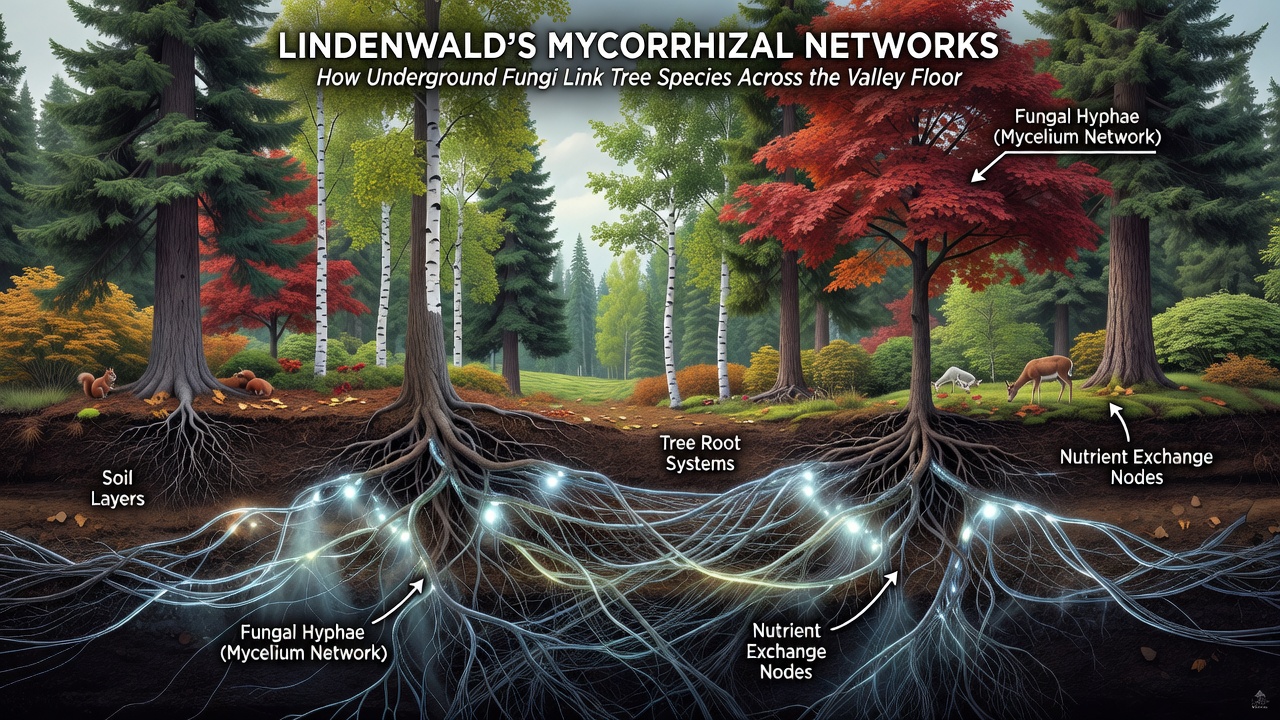
Researchers have mapped extensive mycorrhizal networks beneath Lindenwald valley that connect roots of multiple tree species through fungal hyphae, and these structures facilitate the transfer of nutrients, water, and chemical signals across the forest floor. Data from soil core samples collected over several seasons show that ectomycorrhizal fungi form dense webs linking beech, oak, and linden trees in particular zones where soil moisture remains consistent throughout the year.
Formation of Fungal Connections
Hyphae from fungi such as those in the genera Boletus and Amanita extend from tree roots into the surrounding soil, and they create pathways that allow phosphorus and nitrogen to move between individual trees while also distributing carbon compounds produced through photosynthesis. Studies conducted by forestry institutes in Canada and Germany confirm that these networks develop over decades as fungal spores germinate near young seedlings and gradually integrate with established root systems, whereas areas with higher clay content in the valley demonstrate slower network expansion due to compacted soil layers.
Measurements taken at multiple sites indicate that up to 80 percent of trees in the central valley floor participate in these shared systems, and carbon isotope tracing reveals that sugars flow from larger canopy trees toward smaller saplings during periods of reduced sunlight in autumn months. Observers note that this resource sharing becomes especially active when drought conditions persist for more than three weeks, at which point water drawn from deeper soil layers reaches stressed individuals through the fungal bridges.
Species Interactions Across the Valley
Beech trees serve as primary hubs in many sections of the network because their extensive lateral roots intersect with numerous fungal species, yet oak trees contribute substantial carbon inputs during summer growth phases that sustain the overall structure. Linden species scattered along the lower slopes connect to these webs at lower densities, and researchers have recorded chemical signal exchanges that appear to coordinate defensive responses against insect outbreaks in adjacent stands.
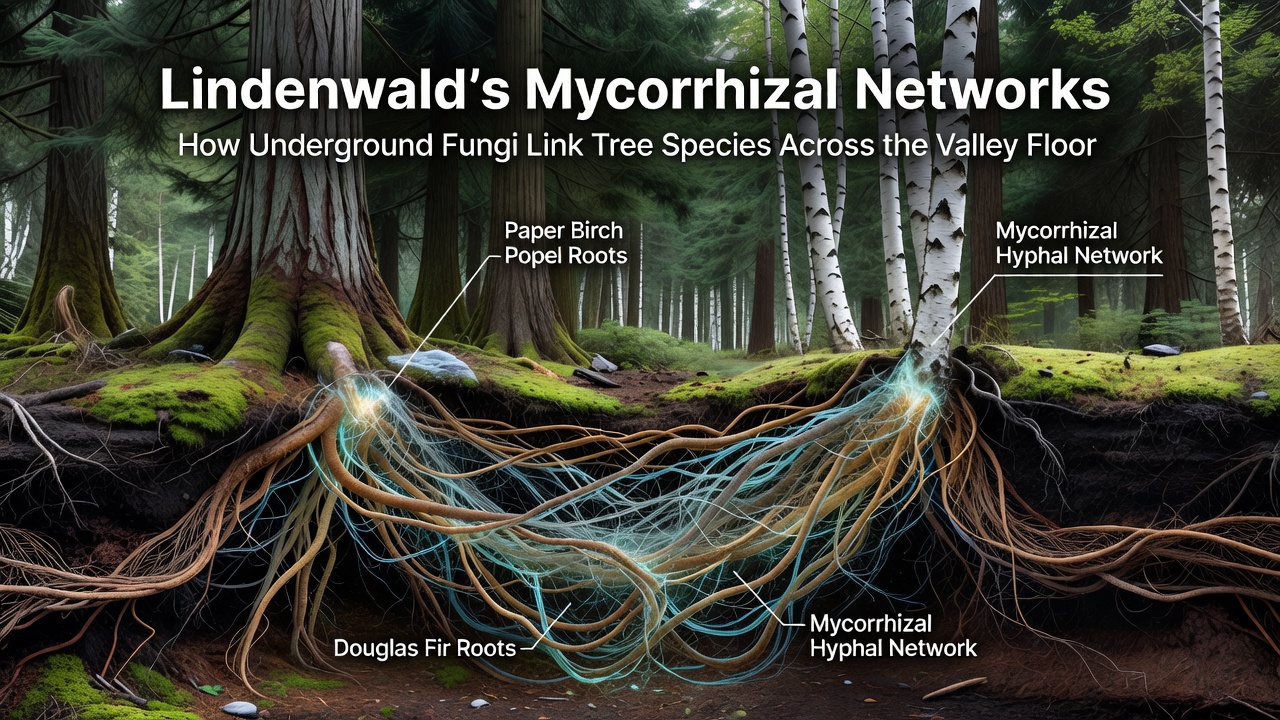
Sampling efforts completed before October 2026 documented seasonal shifts in network activity, with peak phosphorus transfer rates occurring in spring when new root growth coincides with fungal fruiting bodies emerging at the surface. Those patterns align with findings from a University of British Columbia project on similar temperate forests that tracked isotope movement across connected root zones over multi-year periods.
Monitoring and Data Collection Methods
Technicians employ ground-penetrating radar combined with DNA sequencing of soil samples to trace fungal species distribution without disturbing the networks, and results from these methods show distinct clusters where certain fungi dominate based on tree age and soil pH levels. Annual reports from the European Forest Institute highlight that such mapping techniques have improved accuracy in predicting how disturbances like selective logging affect nutrient cycling across connected stands.
Continued monitoring through October 2026 has captured baseline information on network resilience following recent storm events that toppled several mature beech trees, and early analysis suggests that surviving connections rerouted resources to damaged areas within weeks. Figures released by Australian research groups studying analogous systems in eucalyptus forests indicate comparable recovery timelines when fungal diversity remains high.
Broader Ecological Patterns
Nutrient gradients mapped across the valley floor reveal higher concentrations of available nitrogen near network hubs, and these zones correlate with increased seedling survival rates during the first five years of growth. Soil respiration data collected at regular intervals demonstrate that fungal activity accounts for a measurable portion of belowground carbon flux, particularly in areas where multiple tree species overlap their root territories.
Linkages extend laterally for distances exceeding 20 meters in some locations according to root excavation records, and this spatial reach allows isolated trees on the valley edges to participate in resource exchanges that would otherwise remain unavailable. What's interesting is how these patterns hold steady despite variations in annual rainfall totals recorded over the past decade.
Conclusion
Evidence from ongoing surveys shows that Lindenwald's mycorrhizal networks function as integrated systems supporting tree species across the valley floor through documented transfers of water, nutrients, and signals. Continued data collection will refine understanding of how these fungal structures respond to changing environmental conditions while maintaining connections among the dominant species present.